
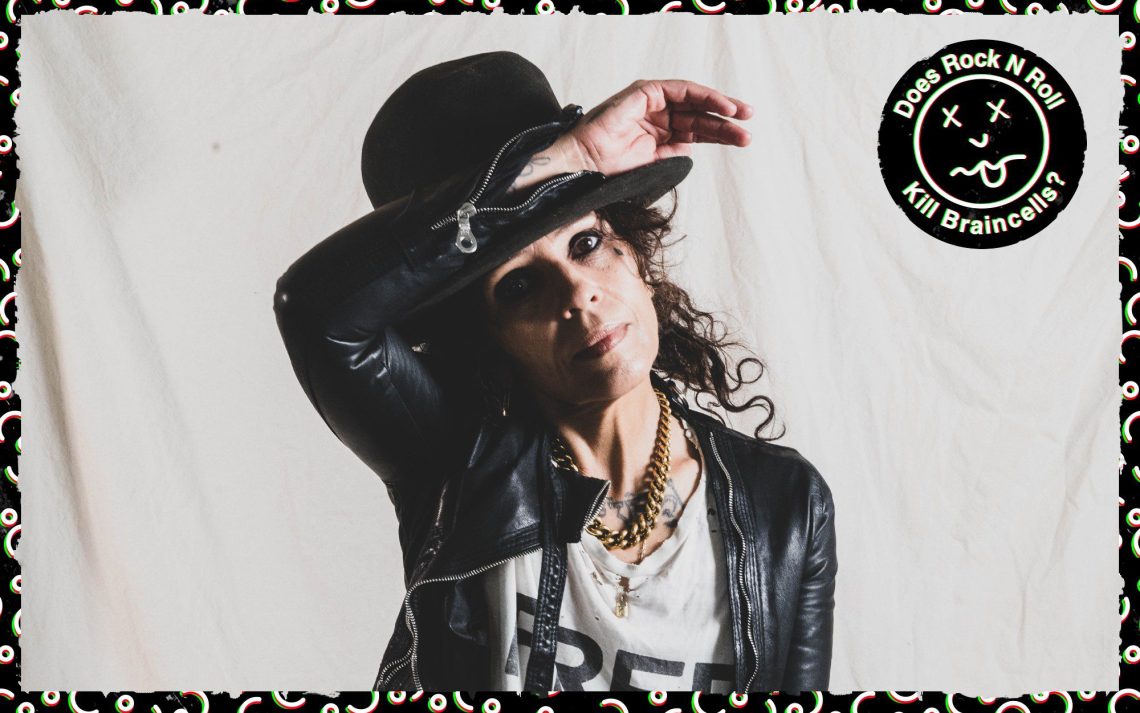
The Unlikely Second Act of Rock’s Most Defiant Anthem
There’s something almost poetic about the fact that “What’s Up” – a song born from Linda Perry’s raw frustration in 1993 – is still capable of sparking cultural moments in 2026. But that’s exactly what happened when a TikTok mashup combining the 4 Non Blondes classic with Nicki Minaj’s “Beez In The Trap” went viral earlier this year, transforming a 90s rock staple into the kind of zeitgeist-defining trend that no marketing budget could manufacture.
What makes this resurgence particularly fascinating is not just that the song endured – plenty of 90s hits have their nostalgic moments – but that it arrived at precisely the moment when 4 Non Blondes had reunited. “We’d just played BottleRock festival in May 2025,” Perry explained in a recent interview, “and we couldn’t have planned that timing. It took everything to another level.”
Why This Song Simply Won’t Die
Ask most people what makes “What’s Up” so enduringly powerful, and you’ll probably get a shrug followed by a half-remembered chorus. But Perry’s explanation cuts straight to the heart of its longevity: the song is fundamentally about universal frustration with power structures and those who abuse them. It’s not dated to any particular decade or crisis – it’s a blueprint for discontent that every generation can remix according to their own circumstances.
“There’s always some asshole fucking shit up,” Perry said bluntly. “The song is about rebellion, revolution, standing up. You can whip that song out for so many different scenarios. And you don’t have to be a good singer to join in when it plays.”
That last point matters enormously. In an era where TikTok democratises participation and removes barriers to cultural involvement, “What’s Up” is the perfect vehicle. It’s deceptively simple – the hook is infectious, the message transparent, and crucially, it invites rather than excludes. Whether you’re Madonna, Brian May, or Sabrina Carpenter, the song doesn’t demand virtuosity. It demands conviction.
The Mainstream Gatekeepers She Left Behind
What’s perhaps most striking about revisiting Perry’s career journey is how much pushback she faced for simply being herself. When 4 Non Blondes appeared on Late Show With David Letterman in 1994, producers demanded she remove the words “choice” and “dyke” from her guitar’s visual messaging. She refused. It’s a small moment that speaks volumes about the institutionalised misogyny and homophobia of the music industry in that era – and frankly, still lurks beneath the surface today.
The industry’s resistance was predictable and depressing in equal measure. Male-dominated bands felt threatened. She recalls being called slurs whilst touring, and remembers a particularly cutting moment in Paris when Whitesnake attempted to demean her by pointing out they were playing smaller venues. Perry’s response was withering: “I’m so sorry a bunch of dykes are playing a stadium while you guys are down the street playing a small theatre.”
That refusal to be diminished, to shrink herself, to accept the terms the industry tried to impose – that’s the DNA of “What’s Up” itself. It’s not a song that asks permission to exist. It demands space.
A Chart History That Almost Wasn’t
“What’s Up” peaked at Number 2 in the UK charts in 1994, pipped to the top spot by Take That’s “Pray.” There’s a certain poetic irony to this – Take That represented the polished, manufactured boyband template that dominated mid-90s pop, while Perry and 4 Non Blondes represented something rawer and less easily controlled. Perry recalls running into Take That frequently on the promotional circuit and notes they were genuinely supportive, which speaks well of them as individuals. But the chart positioning itself feels almost symbolic: even at their commercial peak, the music industry was still preferencing the safer, more marketable alternative.
Yet here’s what’s remarkable: we’re in 2026, and nobody’s doing TikTok dances to “Pray.” Perry’s anthem proved to have more staying power, more cultural elasticity, more genuine human resonance than the glossy pop product that momentarily beat it.
Street Fighter and the Democratisation of Cool
That the song now appears in a video game film adaptation – with Ken Masters singing it whilst intoxicated at karaoke – feels almost too on-brand to be true. Perry described the moment as “light and fun,” and she’s right. There’s something wonderfully anarchic about a martial arts film character drunkenly belting out “What’s going on?” at karaoke. It’s the kind of cultural permeation that suggests a song has transcended its original context entirely and become pure cultural property – in the best possible way.
The Larger Question: Why Now?
The viral TikTok moment of 2026 raises interesting questions about what makes certain songs “sticky” across decades. “What’s Up” has all the ingredients: a hook so memorable you can hum it from just reading those three words; lyrics that function as both personal catharsis and collective statement; and critically, an artist who never compromised the song’s integrity or message to fit industry expectations.
The participation of cultural figures like Madonna and Martin Scorsese in the TikTok trend gave it legitimacy and reach, but the song’s actual power predates those endorsements by three decades. What the 2026 viral moment proved is that authenticity doesn’t expire. If anything, in an age of algorithmic curation and manufactured trends, genuine expression becomes increasingly valuable.
The Defiance Continues
Reflecting on Perry’s career – her willingness to be confrontational, her refusal to dilute her message, her steadfast commitment to artistic honesty – it becomes clear that “What’s Up” wasn’t a fluke. It was the inevitable product of someone who simply wouldn’t accept the boundaries others tried to impose. Thirty-three years later, that same defiance is what keeps the song alive in the cultural conversation.
In 2026, that feels more urgent and necessary than ever. In a world still populated by power-hungry idiots, still requiring constant revolution and resistance, “What’s Up” remains the perfect soundtrack for people who refuse to be silent.
